A selection of research projects, software and engineering work I have led or contributed to. Each entry describes my role and what the team delivered.
Principal Investigator & Project Lead · $229,531 commissioned study
This national study examined how workers use generative AI and what support they need from employers. I led the study, coordinated the research team, co-design and working group engagement, and subsequently developed the findings into resources for employers.
The work involved a 41-member national AI Research Working Group representing 36 organisations, spanning government, unions, professional bodies, universities and employers of different sizes.
Working group members represented organisations including the Digital Transformation Agency, National Artificial Intelligence Centre, Commonwealth Bank, Woolworths Group, Suncorp, Australian Council of Trade Unions, Australian Industry Group and the Council of Small Business Organisations Australia (COSBOA). See FSO’s published membership list ↗ (opens in a new tab)
DeliveredA national research report, stakeholder workshops and co-design sessions, and an employer-support toolkit released as a working web application and downloadable resources for organisations building AI literacy, workforce capability and readiness.
The research and employer-support resources have since informed further adaptation and engagement with SMEs, including FSO’s SME AI Coach.
QUT / ARC BITA: I led the team with Dr Ho Fai (Ben) Chan and Dr Stephen Whyte, with coordination and administrative support from Jen Petley.
Future Skills Organisation: Michelle Circelli, Timothy Burt, Peta Skujins and the broader FSO team collaborated on the original project. Siobhan O’Sullivan has supported the subsequent stage and engagement with SMEs.
QUT research collaborations · 2026–present
Research software for archives and scientific interviews
Principal Investigator & Project Lead
I lead two projects that help researchers search source material and check information extracted from it.
Spanish Inquisition archival research platform
With collaborators at QUT, Universidad de Oviedo, Universidade da Coruña and QUT eResearch, I’m developing software to search historical judicial records and extract information for analysis. I lead the project and supervise technical development. Extracted records retain links to the original documents so researchers can check them.
DeliveredAn access-controlled research application deployed in a QUT-supported environment, with structured extraction and links back to the archival sources.
Archival research
Semantic retrieval
Structured extraction
Human verification
Team & collaborators
Tim Nguyen, an ARC BITA research assistant, undertakes the main software development under my supervision. The QUT / ARC BITA research team includes Professor Benno Torgler, Dr Ho Fai (Ben) Chan and Dr Douglas (Tony) Beatton, with deployment support from QUT eResearch.
International collaborators include Professor David Matesanz Gómez (Universidad de Oviedo) and Andrea Teira Fachado (Universidade da Coruña).
Web of Stories scientometrics platform
This platform lets researchers search interviews, videos and transcripts from prominent scientists. It links people and concepts across the material, helping researchers trace scientific relationships and the development of ideas.
Access to both live web applications is currently restricted through QUT’s network. The research team intends to make them publicly accessible in the future.
DeliveredAn access-controlled research application deployed in a QUT-supported environment, connecting interviews and transcripts through retrieval and knowledge graph workflows.
Scientometrics
Knowledge graphs
Scientific interviews
Source provenance
Team & collaborators
Tim Nguyen, an ARC BITA research assistant, undertakes the main software development under my supervision. The QUT / ARC BITA research team includes Professor Benno Torgler, Dr Ho Fai (Ben) Chan and Dr Douglas (Tony) Beatton, with deployment support from QUT eResearch.
QUT · Queensland Department of the Premier and Cabinet · 2023–present
Behavioural simulation for public decisions
Chief Investigator & Project Lead
I lead research and stakeholder engagement on combining synthetic populations, behavioural evidence and agent-based modelling to investigate vulnerability, resilience and decisions in disaster management and crime prevention.
My responsibilities include MPhil supervision, technical coordination and engagement with government and industry research partners.
DeliveredApplied AI and behavioural simulation platform development, with research demonstrations delivered in April 2026.
Synthetic populations
Agent-based modelling
Public decisions
Team & collaborators
Arian Mashhady, an ARC BITA / QUT MPhil student, undertakes the main software development and research under supervision from me, Professor Benno Torgler and Dr Ho Fai (Ben) Chan, with additional support from Dr Douglas (Tony) Beatton.
Government, industry & university collaborations
Evidence for policy and practice
Drivers of AI Investment · IP Australia
Co-author of a 2023 commissioned study connecting workforce skills, job advertisements and patenting activity to investigate AI investment and innovation.
DeliveredA published commissioned research report for IP Australia.
The research team comprised Dr Ho Fai (Ben) Chan, Professor Uwe Dulleck, Professor Benno Torgler and me, with partner support from Annita Nugent and Michael Falk at IP Australia.
RiskWise · AI-assisted qualitative analysis
As Applied AI Research Lead, I led conceptual design and contributed to technical development of a workflow for scalable, traceable qualitative coding. It combines semantic automation, language models, human review and provenance-linked outputs, and has been applied to more than 4,250 Australian agricultural research, conference and extension artefacts.
In progressA draft manuscript on the method and study results for agricultural extension materials, being prepared for submission to a peer-reviewed journal.
Qualitative coding
Semantic automation
Human review
Team & collaborators
With Tim Nguyen and Dr Germán Puga and Professor Marit Kragt at the University of Western Australia.
AI copilots, work and professional identity
I lead a QUT ethics-approved longitudinal study, developed with Inspired Education Australia, examining how enterprise AI copilots affect work practices, capability, identity, trust and collaboration in Queensland high schools.
In progressAn ethics-approved longitudinal study of enterprise AI copilots in Queensland high schools.
Study in progress: Dr Ho Fai (Ben) Chan, Professor Benno Torgler, Dr Douglas (Tony) Beatton, Arian Mashhady and me at QUT / ARC BITA, working primarily with Rashan Senanayake at Inspired Education Australia.
Panalogy Lab · Independent applied AI R&D · 2023–present
SurveyLM
Co-Creator & Research Lead
I co-created SurveyLM, a web platform for exploring how different audiences might respond to ideas, products, policies and communications. Researchers configure synthetic populations using constructed profiles and approved demographic or behavioural data, then run surveys, controlled experiments and “what-if” scenarios across groups and models.
It supports early exploration of alternatives, including questions or audiences that can be costly or difficult to study. Teams can compare wording, imagery and scenarios, challenge assumptions and identify questions for targeted human research. I test where simulated responses agree with human evidence and where they miss variation or depend on modelling choices.
I lead research and experimental design, contribute to software development, and maintain the public application and its cloud deployment. SurveyLM has been live since September 2023.
DeliveredA live research platform, public technical report and peer-reviewed applications, with free academic access supporting empirical validation and user feedback.
Synthetic populations
Behavioural experiments
Model evaluation
Team & collaborators
Co-created and developed with Dr Son Tran and Bang Dao (Panalogy Lab), with research and empirical input from Professor Benno Torgler and Dr Ho Fai (Ben) Chan.
Platform at a glance
46 registered accounts·Approximately A$3,500 in voluntary user donations·Over US$12,500 in AWS Activate credits
As at October 2026. AWS credits are non-cash hosting support; donations are voluntary user contributions.
Registered accounts include researchers affiliated with QUT, the University of Bayreuth, Universidade da Coruña, the Federal University of Espírito Santo and the Institute of Swiss Economic Policy. Researchers affiliated with Maastricht University, the Laboratory for Innovation Science at Harvard and WHU have also used SurveyLM. Academic access is free to support validation, feedback and ongoing improvement.
Current evaluation includes the Behavioural Insights Team’s testing for Queensland road safety research and work with Tales of Tomorrow GmbH on film and series genre, format and theme combinations across synthetic audiences. Other studies explore disaster response scenarios, workplace health, safety and environment change, psychological safety interventions and biomedical governance policy pretesting.
Related commissioned advertising and behavioural research through QUT / ARC BITA totalled approximately A$60,000 for a major Australian insurer.
Researcher controls include configurable populations, image-based and other multimodal designs, sequential and group interactions, cross-model comparisons, and structured exports for statistical and econometric analysis.
Hosting, models & data
Hosting and maintenance: I maintain the public browser-based application on AWS Lightsail in Northern Virginia, USA (us-east-1). Inference processing locations depend on the selected model provider and endpoint.
AI models: SurveyLM combines Panalogy-developed software with third-party pretrained language models. Current integrations include OpenAI, Anthropic, Google, Groq, xAI, Mistral, DeepSeek and Z.AI. We do not currently train foundation models for SurveyLM.
Data handling: Simulations use constructed profiles, approved aggregate data and authorised business materials. Inputs may be sent to selected third-party endpoints for inference. Panalogy does not use customer data for training or fine-tuning by default; any such use requires separate agreement and authorisation. Provider training-use, retention and processing terms are reviewed per endpoint. Data minimisation, access, encryption, deletion and incident-response requirements are agreed before confidential data is introduced.
Enterprise configurations: Australian-region or private hosting, regional or private inference, API access, enterprise authentication, additional connectors and custom endpoints can be scoped. This includes providers such as OpenRouter and client-approved fine-tuned model endpoints. Storage, logs, backups, subprocessors and residency requirements would be verified for each configuration.
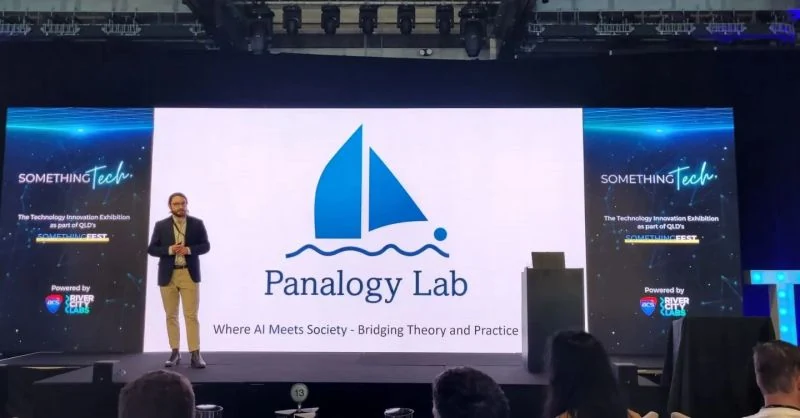
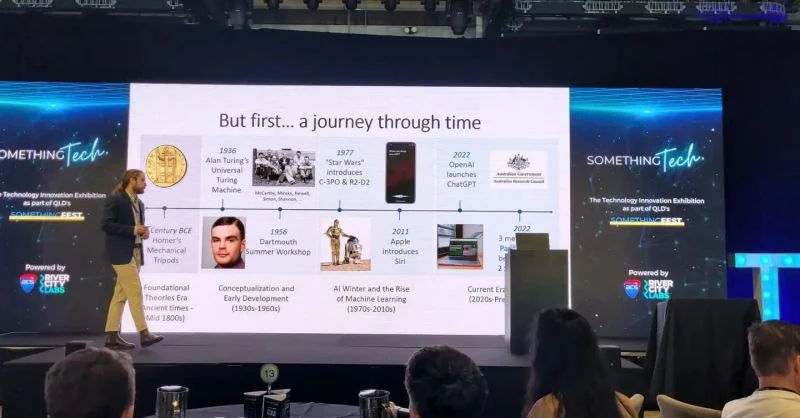
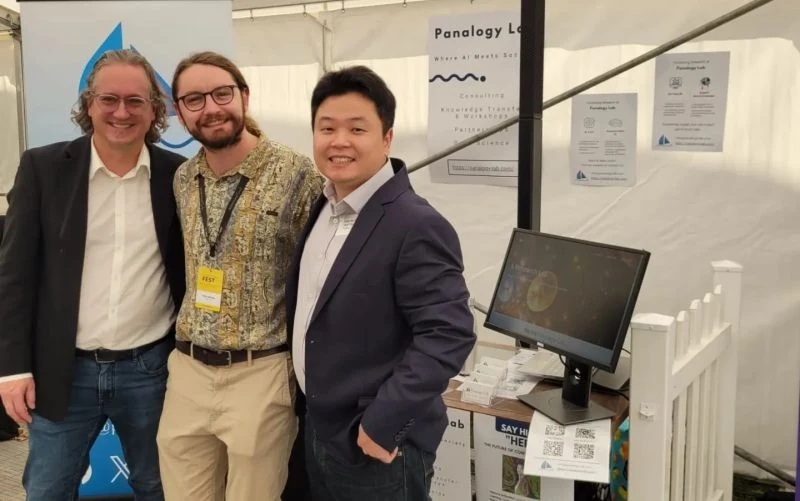
I presented our augmented language model work and showcased Panalogy Lab at Something Tech / Something Fest in Brisbane in 2023.
Introducing Panalogy Lab at Something Tech / Something Fest · Brisbane, 2023Presenting our augmented language model work and the development of AI · 2023With my Panalogy Lab co-founders Professor Benno Torgler (left) and Dr Ho Fai (Ben) Chan (right) at our Something Tech booth · 2023
An industrial fault diagnosis and decision-support system combining live PLC data, vendor-specific knowledge and safety-oriented reasoning.
My contribution: defining industrial use cases and requirements with engineering partners, and coordinating deployment with the technical team.
DeployedIndustrial fault diagnosis and operational decision support at industrial sites in Australia.
Field-reported examples: Across three Australian oil and gas, aluminium production and water-treatment sites, reports include discovery of a 13-year-old emergency-stop wiring fault, a diagnostic task estimated at 3–4 hours completed in 20–30 seconds, and live integration in minutes without a shutdown.
PLC data
Fault diagnosis
Operational decisions
Team & collaborators
Primarily with Dr Son Tran and Latzi Marian at Panalogy Lab.
A manufacturing decision-support system combining production line modelling, a language model reasoning agent and natural language queries of production data.
My contribution: scoping the project with the industry partner, defining operational requirements and coordinating the engineering and software work.
PilotInitial work at a food and beverage manufacturing plant on the Gold Coast. Broader deployment remains under development.
Partner-reported results: Hopper batch-error margins reduced from ±5–8 kg to ±1 kg at a 200 kg setpoint, with 6–7-minute cycles and 120 operating hours per week.
Production modelling
Manufacturing
Decision support
Team & collaborators
Primarily with Dr Son Tran and Latzi Marian at Panalogy Lab.
Panalogy Lab · Knowledge systems
Business and document intelligence
GAIA and Expert Recommender apply document intelligence, structured extraction, semantic search and knowledge graphs to business information and expertise discovery.
I work with the Panalogy Lab team on GAIA, which transforms fragmented organisational documents into connected, searchable knowledge graphs. It combines information extraction, knowledge representation and semantic retrieval to uncover relationships across documents and support source-grounded questions, research and AI workflows.
MVP deliveredA document and business intelligence MVP developed through an AI readiness and scoping engagement for a national engineering services provider.
Document intelligence
Knowledge graphs
Semantic retrieval
AI agents
Team & collaborators
Developed with the broader Panalogy Lab team, particularly Dr Son Tran and me.
I lead the development of workflows for identifying and matching relevant expertise, working with research colleagues and an intern I supervise. The work combines structured evidence, semantic matching and network analysis to identify experts based on their research, experience and connections, beyond conventional keyword searches.
In progressAn MVP system is currently in development.
Recommender systems
Semantic matching
Network analysis
Expertise mapping
Team & collaborators
Primarily with Dr Ho Fai (Ben) Chan, Professor Benno Torgler and an intern I supervise, within the broader Panalogy Lab team.
Panalogy Lab · Verbrec · 2025
Organisational AI readiness
Project Lead
I led an AI readiness and implementation scoping study across a multi-site engineering services organisation. Interviews and focus groups informed the prioritisation of AI pilot opportunities, requirements definition, business cases, cost and schedule estimates, and implementation roadmaps. Governance advice and documentation were informed by ISO/IEC 42001 and Australia's Voluntary AI Safety Standard, with reporting and board-level decision materials supporting investment and implementation planning.
DeliveredAn organisational AI readiness assessment, prioritised pilot opportunities, scoped requirements, implementation roadmaps and governance-informed decision materials to guide AI investment and adoption.
Led by me with contributions from the broader Panalogy Lab team, working with staff and leadership at Verbrec.
AEP Elical · 2018–2023
Engineering in operational environments
Electrical Engineer, Project Manager & Business / Quality Leadership
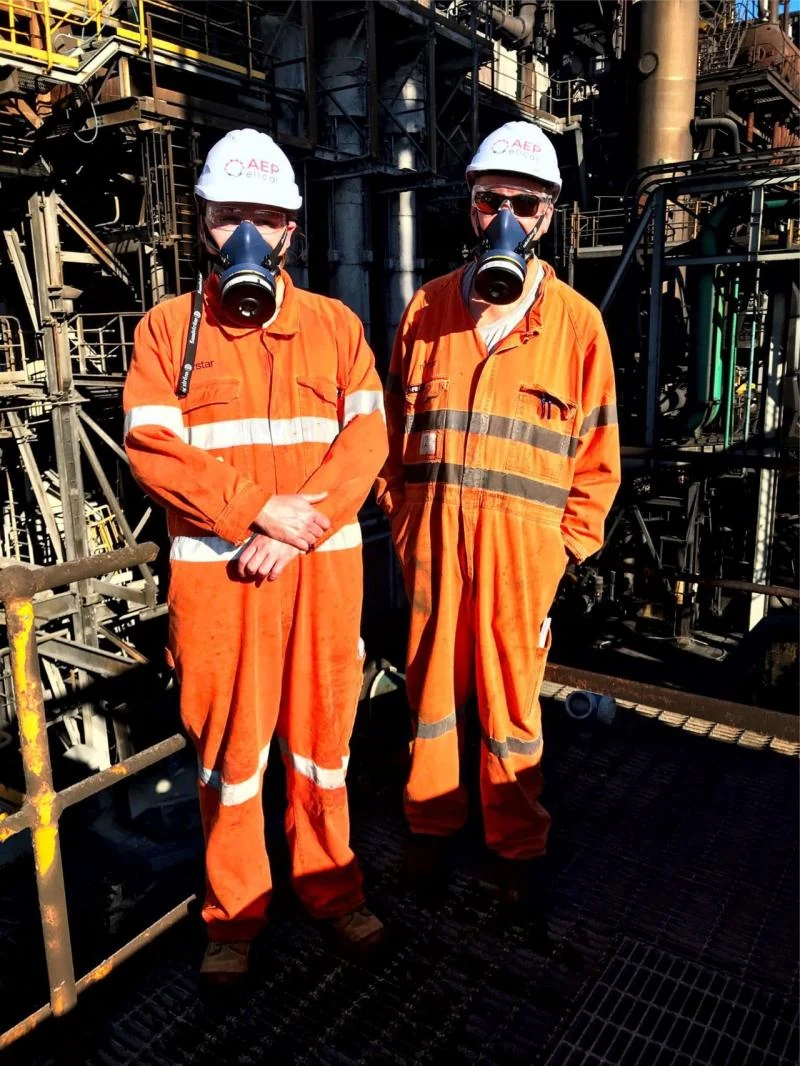
On site at Nyrstar Port Pirie with designer Glen Starkey · AEP Elical
Before my current research and AI work, I delivered multidisciplinary projects in electrical engineering, automation, control system modernisation and functional safety. My work covered scope and requirements, client coordination, technical interfaces, project delivery, and quality and safety management.
I also served as HSEQ Manager (2019–2022), leading an ISO 9001:2015 quality management system, and Nyrstar Client Relationship Manager (2021–2023). This experience continues to shape how I approach AI in operational and safety-sensitive settings.
Selected engineering engagements
Client / location
Project work
NyrstarPort Pirie
Granulation system concept and detailed design; slag caster frame and fume hood modifications; TSL plant launder and tapping floor upgrade; multidisciplinary project leader services.
BMA & BHPQueensland / NSW
Control system modernisation, functional and machine safety, a functional safety audit and industrial process control platform selection.
Glencore / Mount Isa Mines
Substation layout studies, electrical drafting, process water modifications and industrial infrastructure project support.
Wilmar Sugar
Operations and maintenance planning and a functional safety program for Invicta Mill.
EDL Energy
Wingfield biodome engineering and commissioning support.
AMS GroupPort of Melbourne
Vessel tracking system upgrade project.
Powerlink Queensland2016–2017
Earlier digital asset as-built information and data migration work.
Full engineering portfolio 26 engagements · 2016–2023
Engineering project record · October 2026 CV
Client / location
Project and period
Wildfire Energy
Project Proton environmental and land development approvals2022–2023 · P1915
BFX094 Industrial Control System Process Control Platform Selection Study2019 · P1646
AMS GroupPort of Melbourne
Vessel Tracking System Upgrade2019 · P1645
BMANorwich Park Mine
Phase 2 Options Study for Mine Infrastructure Area2018–2019 · P1634
Powerlink Queensland
Digital Asset As-Building and Data Migration Project2016–2017
AEP Elical engagements, 2018–2023, and earlier work with Powerlink Queensland, 2016–2017. Client names and project references follow my CV; locations are included where recorded.
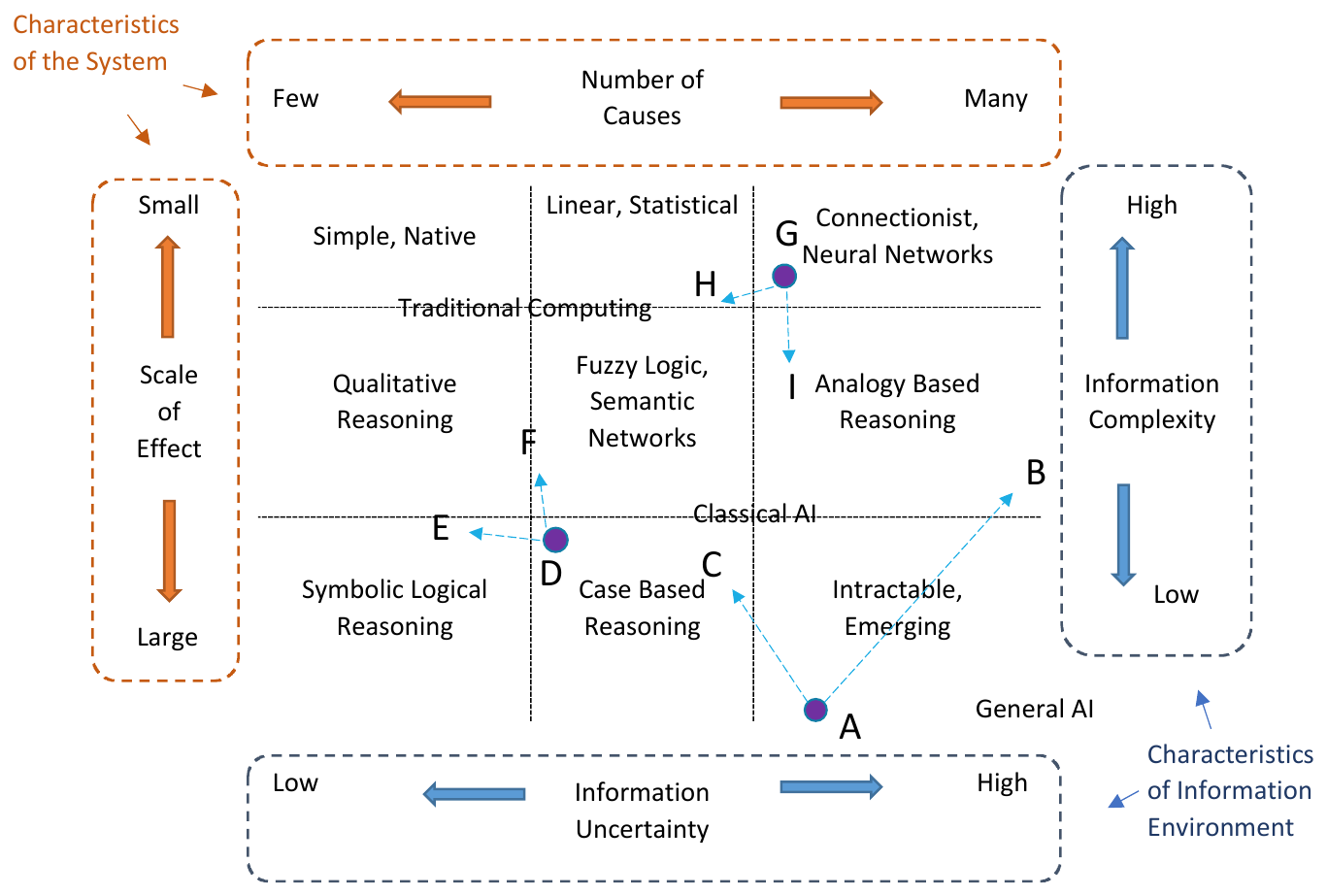
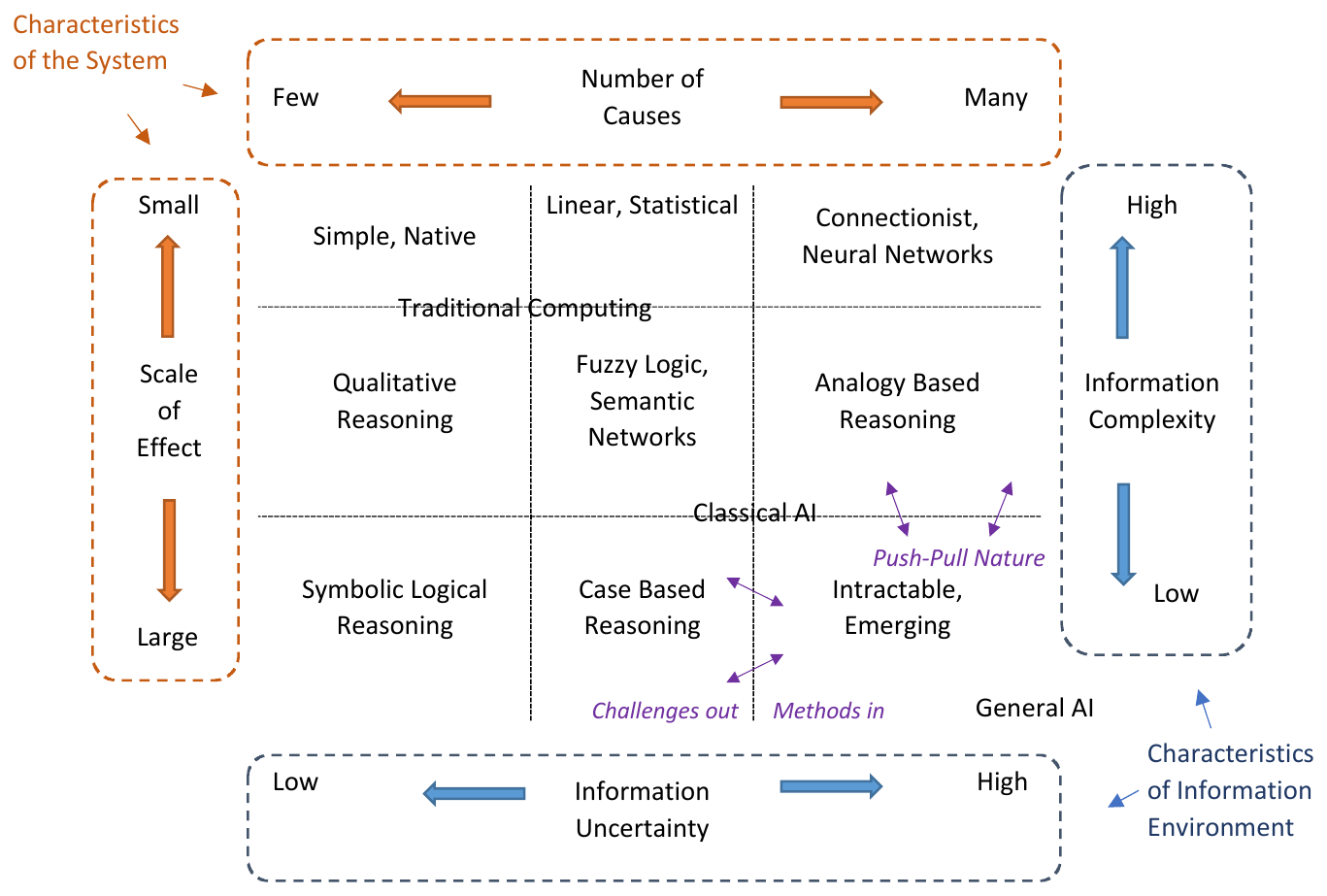
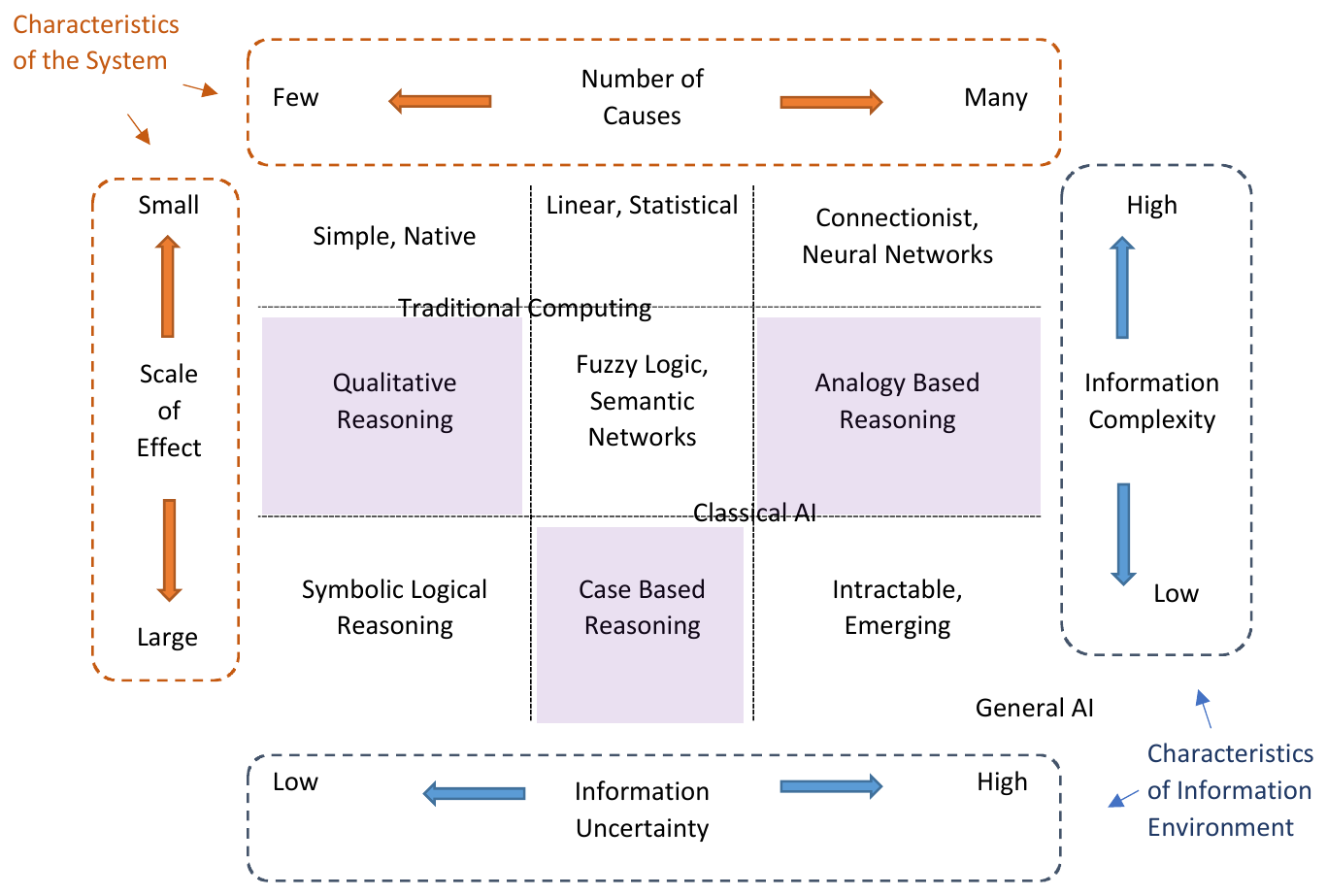
Figure 2 · Moving through the matrix. Gather different data, simplify assumptions, or combine both to reconsider which methods are feasible. Thesis p. 18, adapted from Bickley & Torgler (2023). Thesis and source context ↗ (opens in a new tab)Figure 3 · Methods and emerging challenges. The matrix evolves: new techniques extend what researchers can tackle, while new problems shift the boundary of what is tractable. Thesis p. 20. Thesis and source context ↗ (opens in a new tab)Figure 4 · Mapping a study’s approaches. Shading records the approaches used in Chapter 2: qualitative, analogy-based and case-based reasoning. Use the same approach to map and compare other studies. Thesis p. 22, mapping Bickley & Torgler (2023). Thesis and source context ↗ (opens in a new tab)